Diastasis Recti: How We Measure the Gap—and Help Your Core Work Again
If you are searching “how do I fix the gap in my belly?”, start here: the width matters, but it is not the whole diagnosis. I assess the gap, the tissue beneath it, and what your abdominal wall does when you breathe, move, and lift.
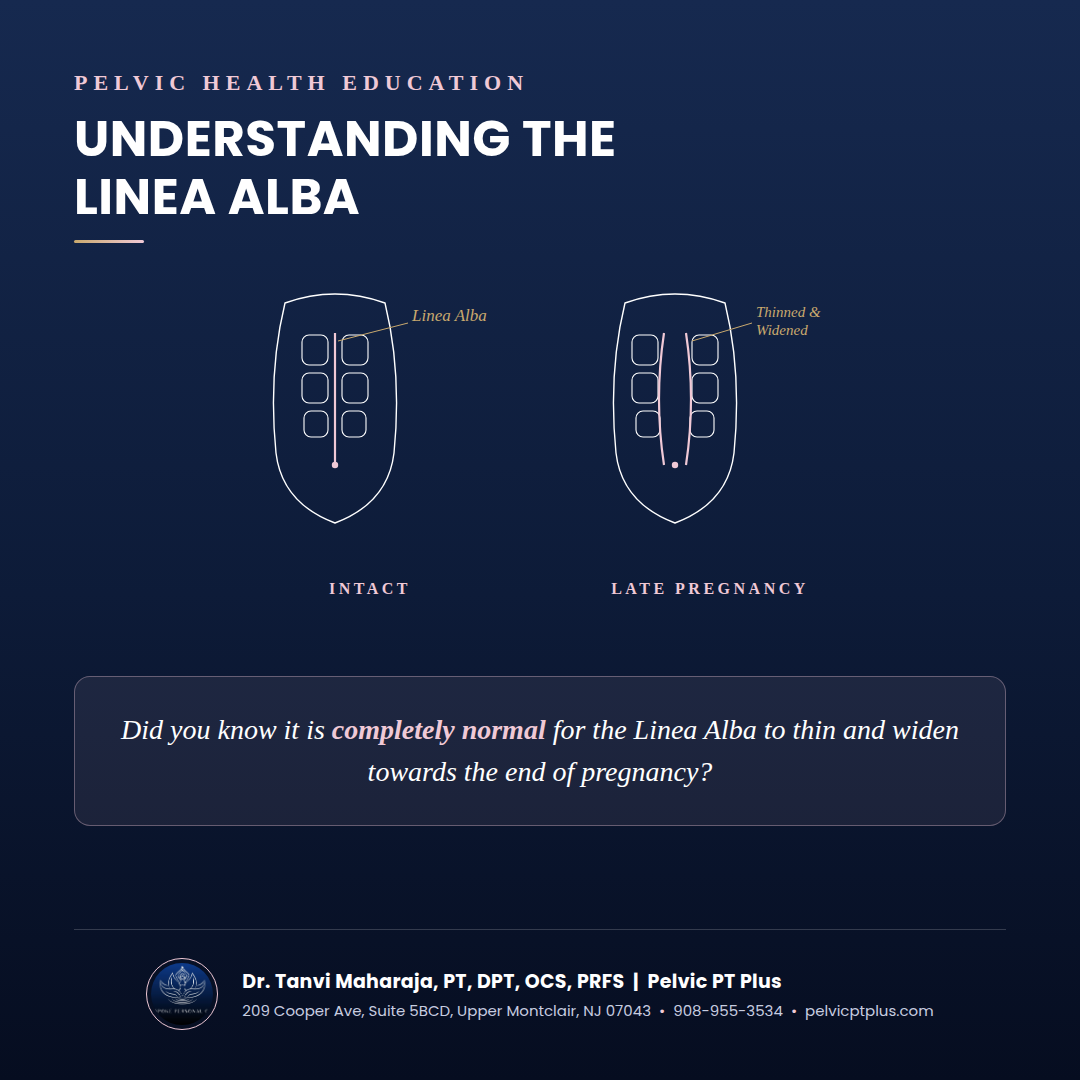
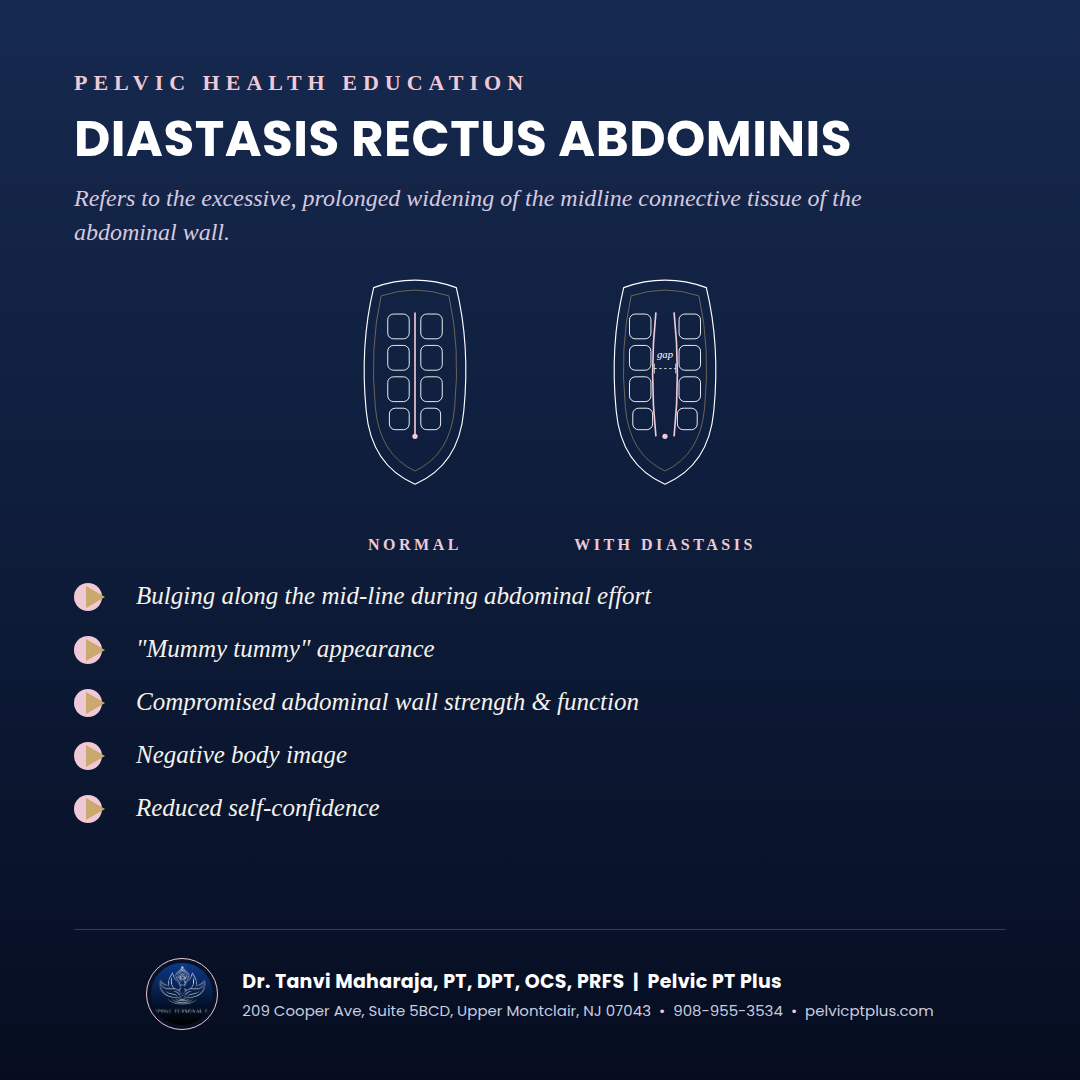
Diastasis rectus abdominis (DRA), often called diastasis recti or abdominal separation, is a prolonged widening of the linea alba—the connective tissue running down the center of the abdomen between the two sides of the rectus abdominis. During pregnancy, that tissue normally thins and widens to make room for a growing baby. After delivery, the useful question is not simply “Do I have a gap?” It is “Can this tissue create tension and transfer load when my body needs it?”
What does diastasis recti look and feel like?
Some people notice a ridge or “doming” along the midline when they sit up, lift a leg, cough, or exercise. Others describe a belly that still looks pregnant, reduced abdominal strength, low-back or pelvic pain, or difficulty feeling supported during lifting. DRA can affect confidence, but appearance alone does not tell me how well your core functions.
Why finger-width palpation is not enough
Palpation is useful. With my fingers, I can feel the width of the separation, the depth my fingers sink, the tension in the linea alba, and how the abdominal wall responds to a head lift or curl-up. It also lets me assess tender tissue and movement patterns. But fingers are not millimeter rulers, and two clinicians may describe the same gap differently.
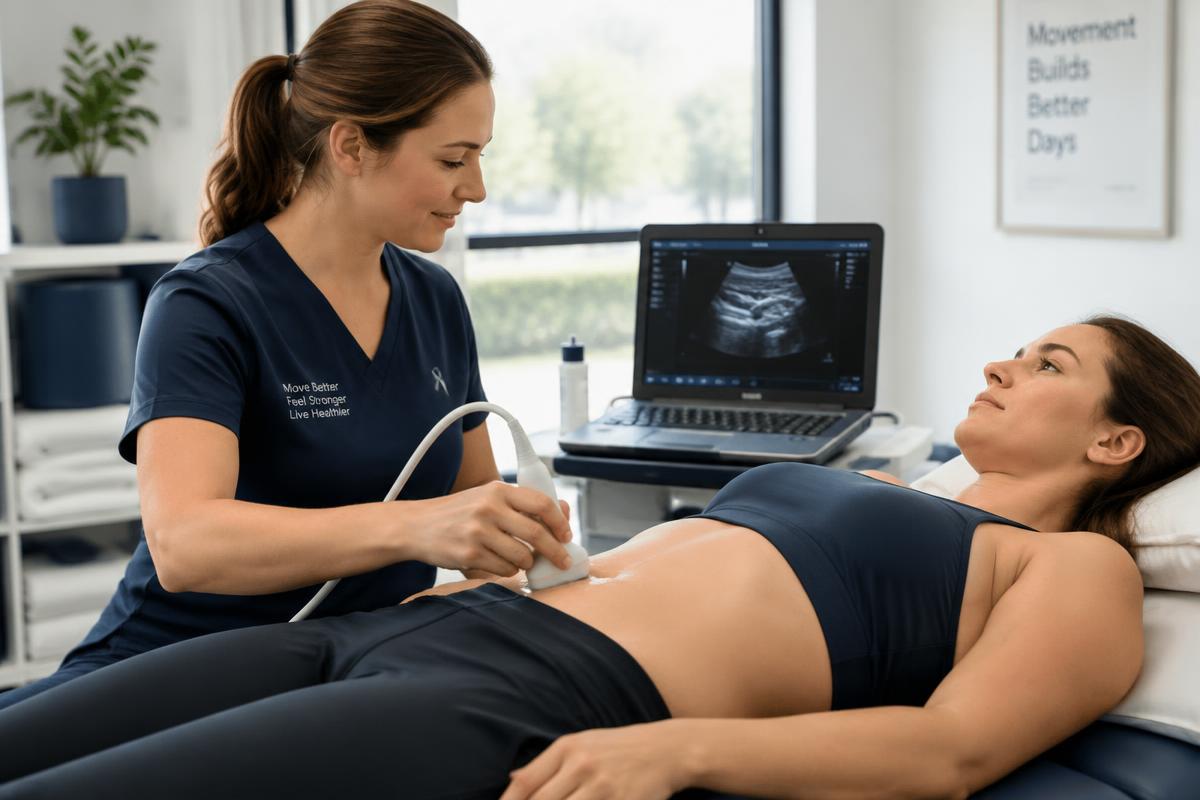
That is why I use palpation together with real-time ultrasound imaging (RUSI) for measurement and biofeedback. Real-time ultrasound is the gold standard for measuring diastasis recti — it shows the inter-rectus distance objectively, in millimeters, instead of relying on a finger estimate. Ultrasound is a safe, non-invasive method that can be used during pregnancy and repeated as needed. It allows me to measure the inter-rectus distance at consistent points and under consistent conditions. It also gives us a dynamic view: we can watch what happens to the gap and the surrounding muscles while you breathe, lift your head, activate your deep core, or perform an exercise.
We record those measurements and repeat them over time. That gives us an objective way to track change on top of what you feel and what I find by hand. Ultrasound also shows whether the transversus abdominis—the deepest abdominal layer—is engaging or whether you are substituting by gripping, breath-holding, or pushing pressure forward. It does not replace clinical expertise; it makes the assessment more complete.
Expertise matters when the exercise list is not one-size-fits-all
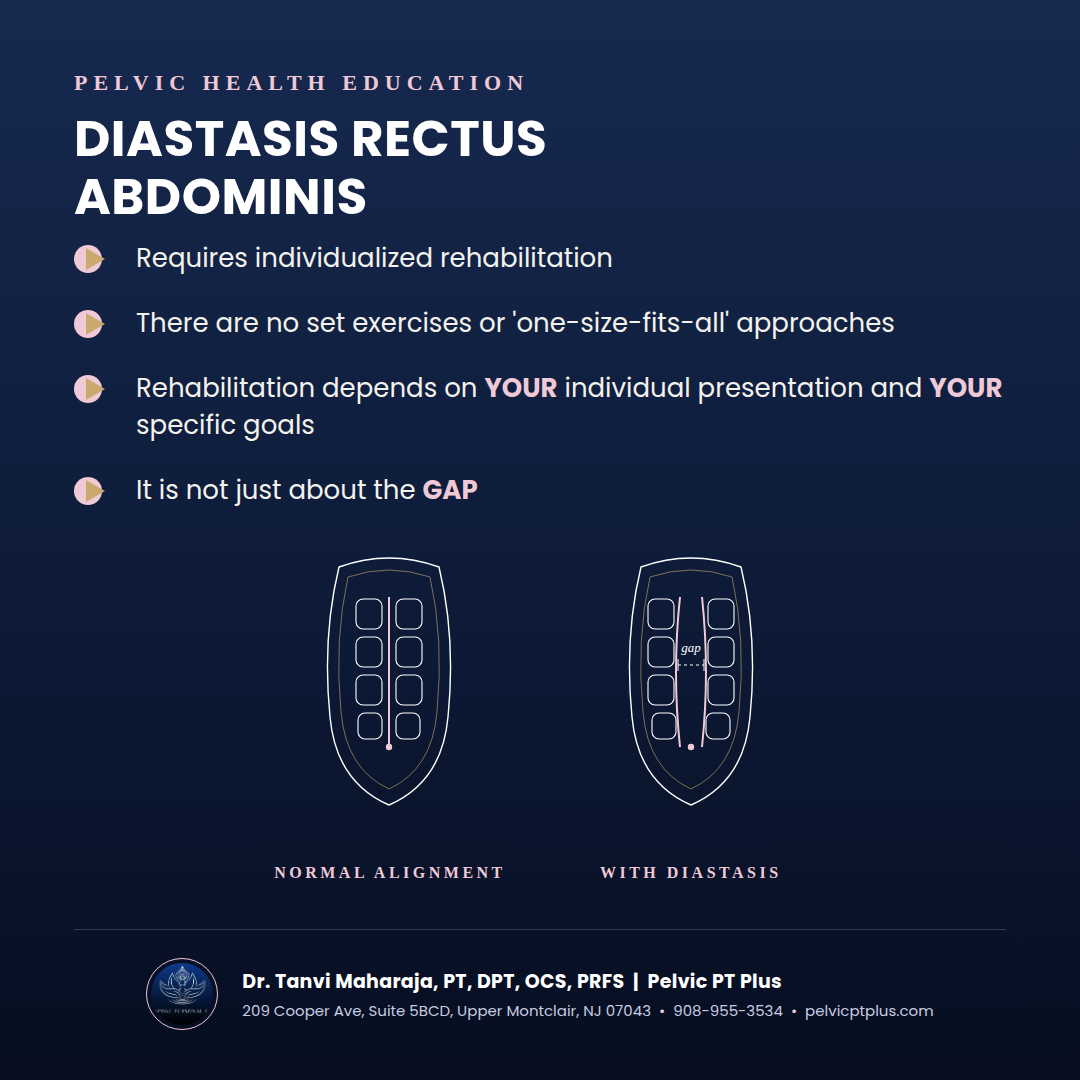
I am certified in Evidence-Based DRA Assessment and Treatment and have advanced training in rehabilitative ultrasound imaging of the lumbopelvic complex. I trained under stalwarts in DRA research like Grainne Donnelly, Anthony Lo, and Diane Lee, whose work shaped how I assess the abdominal wall, read the linea alba, and progress loading. That combination matters because DRA is not treated by handing everyone the same three “core” exercises. Your starting point depends on your tissue tension, breathing strategy, symptoms, delivery and surgical history, current strength, and what you need your body to do.
Why did I develop DRA?
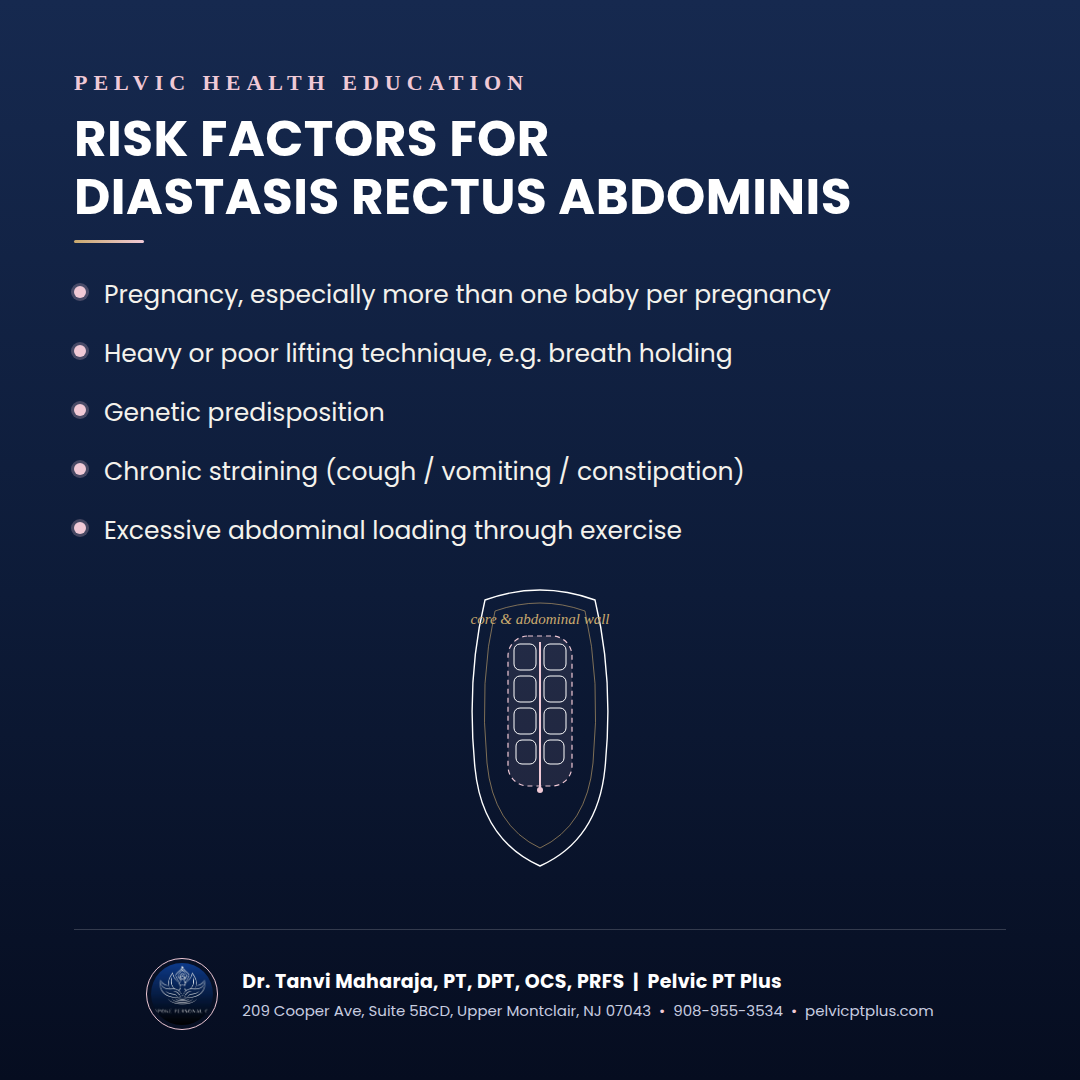
Pregnancy is the most familiar factor, particularly a pregnancy with more than one baby, but it is not the only one. Genetics affect connective tissue. Repeated breath-holding, chronic coughing, vomiting, constipation and straining can repeatedly increase abdominal pressure. Heavy lifting is not automatically harmful, but lifting with poor pressure management can keep loading the midline in a way it cannot yet control. Excessive abdominal loading during exercise can do the same.
Does a C-section cause diastasis recti?
DRA can follow either vaginal or Cesarean delivery. Research has not shown a simple, consistent difference in the gap based only on delivery type. A C-section can, however, add scar restriction and early trunk weakness or fatigue to the picture. If you had a Cesarean birth, I assess the abdominal wall and the scar as related parts of the same system rather than assuming the incision caused the separation.
Can I exercise if I have DRA?
Yes. A DRA diagnosis does not mean you need to stop exercising, and no exercise is permanently forbidden. It means we choose a version and dose you can control. I look for what happens at the midline, whether you can breathe through the effort, whether pressure is directed outward or downward, and whether the movement causes pain, heaviness, leaking, or loss of form.
Crunches, planks, running, and lifting are not universally “bad.” For one person, a modified plank may be an appropriate starting exercise. For another, it may create obvious doming and require a different entry point. We might begin with breathing and low-load deep abdominal work, then progress to heel slides, squats, carries, planks, running, or heavier lifting. The destination should match your life—not a generic postpartum checklist.
So, how do you fix the gap in your belly?
The honest goal is not to promise that every gap will fully close. Exercise research does not support a single routine that reliably eliminates DRA for everyone, and gap width can change without function improving. Physical therapy is used to improve how the abdominal wall creates tension, coordinates with the diaphragm and pelvic floor, and tolerates progressive load. A smaller measurement may follow, but better support, less bulging, greater strength, and confidence with movement are the outcomes that matter most.
- A baseline assessment using palpation and precise ultrasound measurements
- Breathing and pressure-management strategies that you can use during exercise and daily lifting
- Ultrasound-guided retraining so you can see the deep abdominal muscles work instead of guessing
- Individualized strength progressions based on your symptoms, tissue response, and goals
- Scar and abdominal-wall manual therapy when restriction is part of the problem
- Repeat measurements and functional testing to show what is changing and guide the next step
The abdominal wall is only one part of how your body manages pressure. The pelvic floor sits at the bottom of that same pressure system, and its mobility, coordination, and strength matter just as much as the gap above it. If the pelvic floor is tight, guarded, or poorly coordinated, pressure from breathing, lifting, or exercise can push outward into the linea alba instead of being shared evenly. That is why I do not treat DRA in isolation. At Pelvic PT Plus, I assess and treat the pelvic floor through internal, external, and real-time ultrasound biofeedback examination—so I can see how the muscles move, whether they coordinate with the breath and the deep abdomen, and whether they can generate and release tension well. Restoring that coordination is often what turns a program that feels like effort into one that actually changes how your core supports you.
When should I get assessed?
An assessment is useful if you see persistent doming, feel unsupported through the abdomen, have pain or leaking with activity, are unsure how to return to exercise, or keep doing online DRA workouts without knowing whether they suit your body. You do not need to wait until you have stopped breastfeeding, lost weight, or reached a certain number of months postpartum. DRA can also be assessed years after pregnancy.
Do you need surgery?
Most people begin with conservative care. If there is a suspected hernia, significant pain, or persistent functional limitation after a thorough course of rehabilitation, I will recommend medical evaluation. Surgery may be appropriate for a smaller group of patients, and rehabilitation can still help prepare the abdominal wall before surgery and guide a safe return to activity afterward.
We measure the gap accurately, but we treat the person—not the number on the screen.